The Propaganda Ministry, formally the Reich Ministry of Public Enlightenment and Propaganda, was established in 1933 shortly after the Nazi seizure of power. It was headed by Joseph Goebbels, one of Adolf Hitler’s closest and most fanatically loyal allies. Its purpose wasn’t subtle: shape every aspect of public perception so that the regime appeared legitimate, unified, and inevitable. Goebbels, a former writer, understood something many regimes learn the hard way: people don’t need to be forced to believe. If you can flood their world with one version of reality fueled with a compelling narrative and strong emotions, alternatives feel impossible.
The ministry quickly expanded into a sprawling bureaucracy that controlled newspapers, radio, film, theater, music, literature, and even fine art. Independent media was absorbed, coordinated, or eliminated. Journalists were required to follow official guidelines; editors received daily instructions on what to publish and how to frame it.
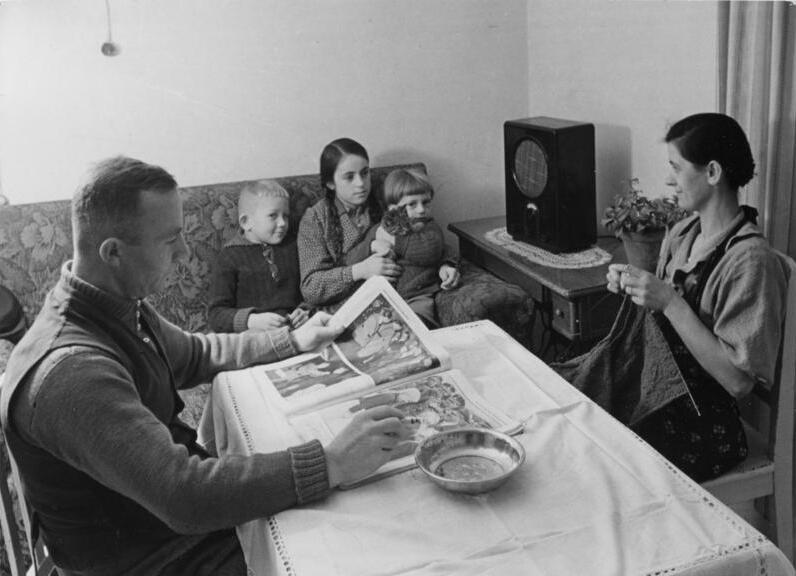
Radio became especially important because it reached into ordinary homes. Cheap receivers, the Volksempfänger, were promoted so that Hitler’s speeches and state messaging could saturate daily life.
Film and culture were weaponized with particular care. Through institutions like the Reich Chamber of Culture, artists had to register with the state to work at all. Those deemed politically unreliable, especially Jewish creators, were excluded entirely. Cinema ranged from blatant propaganda like Triumph of the Will to more subtle entertainment films that normalized Nazi values without preaching them.
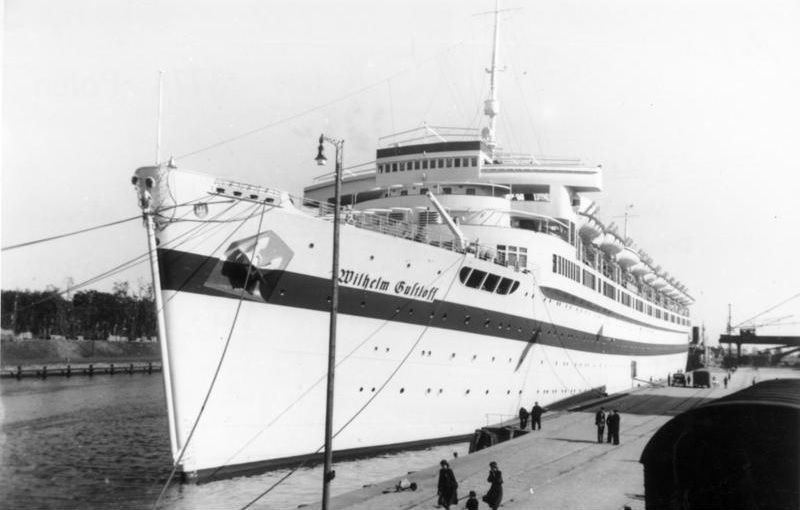
Even leisure became ideological through the Strength Through Joy subsidized vacations. Ships like the Wilhelm Gustloff carried loyal Germans to destinations in Norway, Denmark, France, England. Or if you felt like something sporty, you could visit the Bavarian Alps or hit the beach on the Baltic Sea. All these were affordable to the average German through subsidies and sitting through various political lectures while on the trip – like a modern timeshare meeting.
Propaganda relied heavily on spectacle and emotional manipulation. Mass rallies, symbols, uniforms, and rituals created a sense of belonging and destiny. Events like the Nuremberg Rallies turned politics into theater, blending choreography, lighting, and rhetoric to overwhelm individuals within a collective experience. Messaging often simplified complex issues into emotionally charged binaries: us versus them, strength versus decay. Repetition was key; the same ideas were hammered relentlessly until they felt like common sense rather than ideology.
Ultimately, its success lay in how completely it blurred the line between truth and narrative. It redefined reality for millions of Germans. By controlling information and culture, it helped sustain the Nazi state and enabled its more destructive policies by normalizing them or hiding them altogether. It relied on consistency, saturation, and the human tendency to accept what feels familiar. That’s what made it so effective—and so dangerous.
Image Credits:
- Arbeiterfamilie vor dem Radio:: Wikimedia Commons. Unedited. Source. Bundesarchiv, Bild 146-1978-056-04A / Unknown author / CC-BY-SA 3.0
- Lazarettschiff “Wilhelm Gustloff”:: Wikimedia Commons. Unedited. Source. Bundesarchiv, Bild 183-H27992 / Sonnke, Hans / CC-BY-SA 3.0
“Ordinary Lives, Extraordinary Times”
(c) Jay Daniels. All rights reserved.

