In the Weimar Years
Weimar culture is one of those rare moments where society felt like it’s both inventing the future and quietly falling apart at the same time. Born out of defeat in 1918 and the collapse of the Kaiserreich, the new republic didn’t just change politics, it cracked open German society. Old hierarchies weakened, censorship loosened, and suddenly a flood of new ideas: artistic, political, sexual, rushed in all at once. It was chaotic, electric, and deeply unstable.
Politically, the streets were just as alive as the theaters. The Communist Party of Germany (KPD) saw Weimar not as a republic to improve, but as a temporary phase before revolution. Inspired (and loosely financed) by the USSR, they organized strikes, uprisings, and paramilitary groups like the Red Front Fighters League. Their presence wasn’t abstract. It was physical, loud, and often violent. They clashed regularly with right-wing militias and later Nazi stormtroopers. Berlin in the early 1920s wasn’t a debating society. It was a pressure cooker with fists, bricks, and sometimes bullets.
On the opposite end sat Germany’s industrial and financial elite who navigated the chaos with remarkable flexibility. Big business didn’t love democracy, but it tolerated Weimar so long as profits flowed. During hyperinflation in 1923, many industrialists actually benefited, wiping out debts with worthless currency while acquiring real assets. By the late 1920s, they were increasingly aligned with conservative and nationalist forces, seeing socialism and labor unrest as the greater threat.
Their quiet influence would later become very loud.
Meanwhile, culture itself went wild in a good way, depending on your tolerance for decadence. Berlin became Europe’s playground. Jazz, imported from the United States, flooded clubs and dance halls. Bands played syncopated rhythms that older Germans found alien, even offensive. To conservatives, jazz wasn’t just music; it was a symbol of cultural decay, foreign influence, and racial mixing. To young Germans, jazz was liberation; movement and spontaneity. Jazz was life after the trenches.
Cabarets were the beating heart of this new culture. These weren’t just nightclubs. They were political satire, musical havens, and social commentary rolled into one room. Performers mocked politicians, explored taboo themes, and blurred lines of gender and identity. Shows could be hilarious one moment and brutally cynical the next. If you wanted to understand Weimar, you didn’t read a manifesto. you sat at a small table, drank something questionable, and watched a cabaret act tear society apart with a smile.
We have similar TV programs like Saturday Night Live or The Daily Show. Except the audience can drink and smoke. Instead of a single script, think thousands of little shows in each major city.
Sexual culture more broadly underwent a kind of quiet revolution. Berlin became one of the most open cities in the world for LGBTQ individuals. Institutions like Institute for Sexual Science conducted pioneering research on sexuality and gender identity. There were gay and lesbian bars, publications, and even early forms of gender-affirming care. This wasn’t fringe. It was visible, organized, and, for a time, tolerated. It also made Weimar a target for those who saw it as moral collapse incarnate.
The republic also made real strides in worker protections. The eight-hour workday became standard at its inception, unions gained legitimacy, and systems of collective bargaining expanded. Welfare measures: unemployment insurance, housing programs, etc., attempted to stabilize lives battered by war and inflation.
For many workers, Weimar wasn’t decadence; it was the first time the state seemed to acknowledge they existed as citizens rather than expendable labor.
But these gains came with constant tension. Employers resisted union power, while workers, especially those aligned with the KPD, often saw reforms as insufficient. Strikes were frequent, sometimes paralyzing entire industries. The middle class, squeezed by inflation and instability, often resented both sides. They watched workers demand more and elites protect themselves, and concluded, fairly or not, that the system itself was broken.
Culturally, Weimar also produced some of the most influential art of the 20th century. Movements like Bauhaus redefined architecture and design with clean lines and functional beauty. Film exploded with innovation—dark, psychological works like The Cabinet of Dr. Caligari reflected a society grappling with trauma and instability. Writers, painters, and musicians weren’t just creating. They were dissecting reality, often with unsettling results.
And that’s really the thread tying it all together: contradiction. Weimar Germany was progressive and reactionary, liberated and anxious, creative and violent. All at the same time. You had cutting-edge science next to political street brawls, sexual openness next to rising puritan backlash, democratic reforms alongside growing authoritarian temptation. It wasn’t a stable equilibrium. It was a balancing act on a knife’s edge.
By the end of the 1920s, that balance began to fail. The same cultural freedoms that made Weimar vibrant also made it vulnerable to attack. Conservatives, nationalists, and eventually the Nazis framed the entire era as one long moral and political failure—decadence, weakness, betrayal. And for a population exhausted by crisis, that argument started to land.
Weimar didn’t just collapse economically or politically: it was culturally indicted, judged, and ultimately destroyed by something far darker that promised order at the cost of everything that had made the era so explosively alive.
In the Third Reich
Nazi culture didn’t emerge out of nowhere. It defined itself as the antidote to Weimar. Where the republic had been chaotic and experimental, the new regime promised order, unity, and moral clarity. In practice, that meant something far more rigid: culture was no longer a space for exploration but a tool of the state; art, music, film, even leisure. Everything was expected to serve the ideology of the regime and reinforce a single, approved vision of German life.
At the center of that effort stood Ministry of Public Enlightenment and Propaganda under Joseph Goebbels. This wasn’t just censorship. It was total cultural management. Artists, writers, musicians, and filmmakers had to join state-controlled chambers or they simply couldn’t work. The goal wasn’t subtle persuasion; it was saturation. Every poster, radio broadcast, and film was meant to shape how Germans thought, felt, and even imagined reality.
Film became one of the regime’s most powerful tools. Directors like Leni Riefenstahl created visually stunning works such as Triumph of the Will, which presented the Nazi movement as almost mythic—orderly masses, heroic leadership, a nation reborn. Even entertainment films, comedies, and romances were carefully curated to reinforce acceptable values. The audience wasn’t just watching stories. They were being gently trained in what normal was supposed to look like.
Music and art followed the same pattern of control. The Nazis promoted classical composers like Wagner as embodiments of German greatness while condemning modernist movements as “degenerate.” Jazz, so central to Weimar nightlife, was banned after being labeled foreign and corrupting. Exhibitions like the infamous Degenerate Art show mocked modern artists while elevating state-approved works: idealized farmers, strong soldiers, serene mothers. It was art stripped of ambiguity—clear, direct, and ideologically obedient.
Youth culture became a major battleground. Organizations like the Hitler Youth and the League of German Girls were designed to mold the next generation from an early age. Boys were trained in discipline, physical fitness, and eventual military service. Girls were prepared for motherhood and domestic roles. This wasn’t just extracurricular, it was a parallel education system, shaping identity, loyalty, and worldview long before adulthood.
Gender roles were sharply defined and relentlessly promoted. Women were encouraged, through policy and propaganda, to embrace “Kinder, Kuche, Kirche” (children, kitchen, church). Professional opportunities narrowed, especially for married women, while incentives were offered for large families. Men, meanwhile, were cast as warriors and providers. Compared to Weimar’s fluid and experimental gender culture, Nazi society drew hard lines and enforced them with both social pressure and state policy.
The regime also worked to reshape everyday life through programs like Strength Through Joy. This organization offered subsidized vacations, concerts, and recreational activities, presenting the regime as both provider and benefactor. The idea was to bind citizens emotionally to the state, not just through fear or ideology, but through positive experiences. Even leisure became political, reinforcing the sense of belonging to a unified national community, or Volksgemeinschaft.
Of course, that “community” was built on exclusion. Jewish artists, intellectuals, and performers were systematically removed from cultural life long before the full horrors of the Holocaust unfolded. The same applied to political dissidents, LGBTQ individuals, and anyone deemed “undesirable.” Institutions like Institute for Sexual Science were destroyed, books were burned, and entire cultural currents were erased. Nazi culture didn’t just promote certain values, it actively eliminated alternatives.
Religion occupied a complicated space. The regime tried to co-opt Christianity into a more nationalist, racially aligned form while also promoting a kind of cult of personality replacing Jesus’ Jewish roots to ‘Aryan’. Figures within the regime flirted with ancient symbols, rituals, and ideas of destiny and blood. But ultimately, loyalty to the state, and to Hitler, was meant to supersede all other allegiances. Spiritual life, like everything else, was expected to align with the regime’s goals.
Economically and socially, the regime projected stability and recovery, especially compared to Weimar’s crises. Public works, rearmament, and declining unemployment created a sense of forward momentum. For many ordinary Germans, daily life in the mid-1930s felt more predictable, even optimistic. That stability, however, was tightly interwoven with repression, militarization, and preparation for war. The calm had a direction—and it wasn’t peaceful.
In the end, Nazi culture was about control: of thought, identity, and possibility. Where Weimar had been a cacophony of voices, Nazi Germany enforced a single narrative. It offered belonging, purpose, and order, but only within narrow, rigid boundaries. Everything outside those boundaries was silenced, removed, or destroyed. And that’s the grim irony: in trying to eliminate the chaos of Weimar, the regime created a system so tightly wound that it could only sustain itself through expansion, conflict, and ultimately catastrophe.
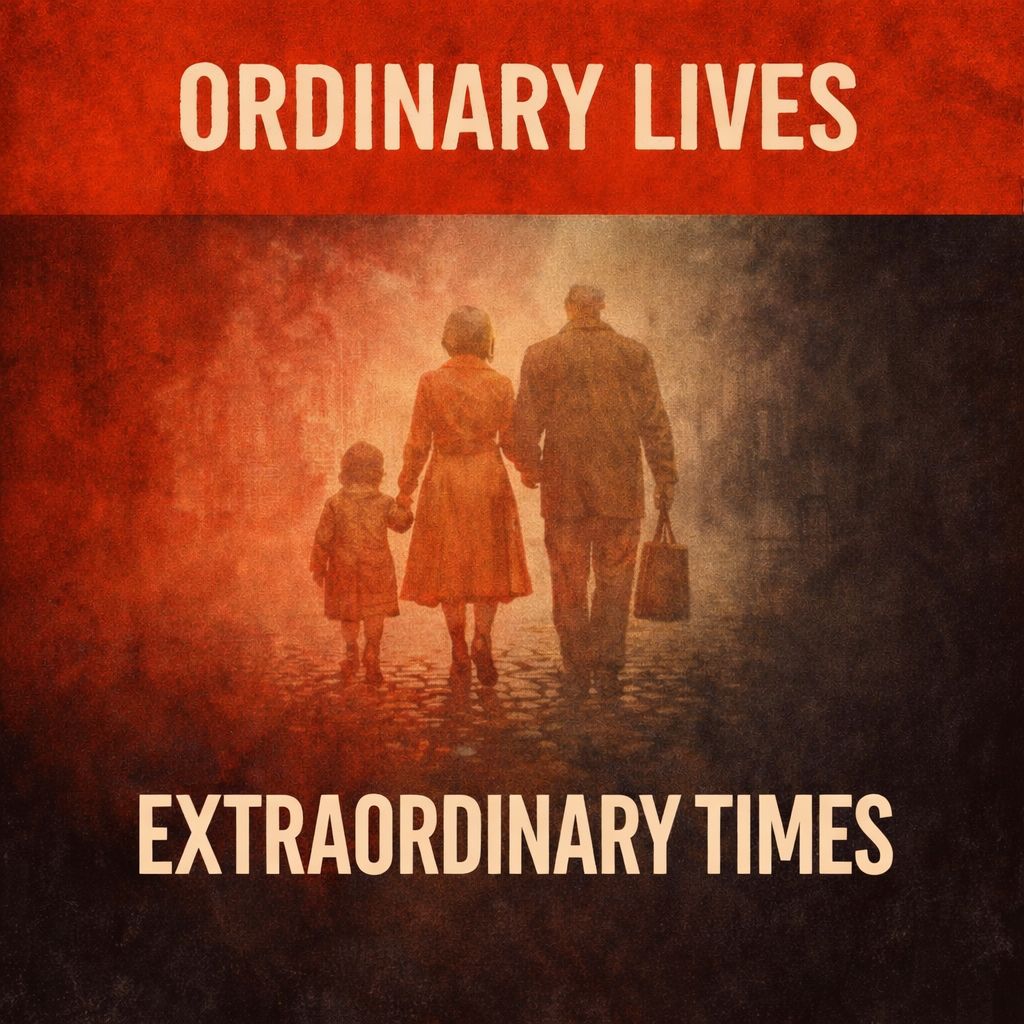
 Ordinary Lives, Extraordinary Times