Cabaret in Weimar Germany wasn’t just nightlife. It was a melting pot of German society. After World War I, German cities like Berlin became laboratories of expression where politics, sexuality, and art collided.
Filled with cigarette smoke and cheap electric lights, cabarets ranged from intimate basement rooms with a piano and a singer in a handsome dress to sprawling revues with full orchestras and elaborate sets. It was theater. It was a confrontation dressed as entertainment, a place where the audience laughed…because the alternative was probably screaming.
Humor with Teeth
The entertainment could be political. Performers mocked politicians, ridiculed inflation, and openly jabbed at the democracy of the Weimar Republic. Writers and composers like crafting lyrics that could lace a cheerful tune with political criticism. A wealthy business owner on a night out with his wife would hear a jaunty melody about unemployment or a flirtatious song that ended with a punchline about corruption with the factory worker at the next table.
If you’ve ever seen the movie Cabaret! with Liza Minelli, the number “Money Makes The World Go Around”, pairs an upbeat melody with a pointed critique of wealth, inequality, and power. The film is set during the final years of the Weimar Republic and it captures the spirit remarkably well.
It was humor with teeth, dangerous enough that it was be among the first things to be banned by the Nazis.
An International Sensation
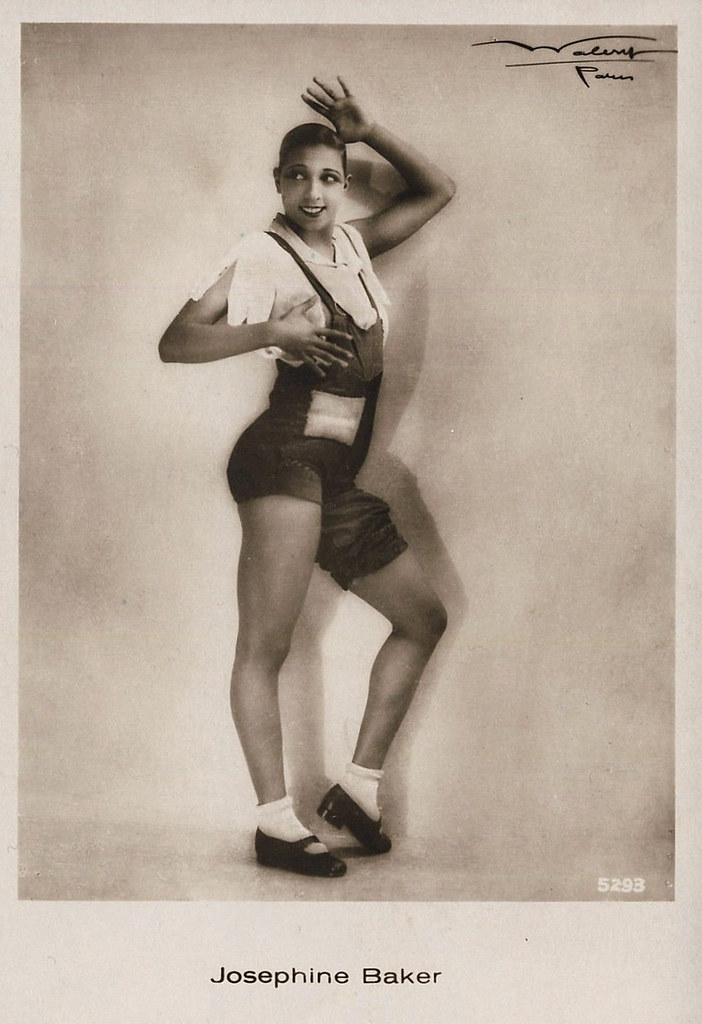
Berlin’s cabaret scene quickly became an international sensation. Performers came from across Europe and beyond, drawn by loose censorship and a paying audience hungry for novelty. American jazz musicians, many of them Black artists escaping racism at home, found a strange freedom here. Figures like Josephine Baker electrified audiences with dances that blended jazz, eroticism, and theatrical flair. To conservative Germans, this felt like cultural invasion; to others, it was the pulse of modernity itself.
Cabaret was also one of the most visible spaces for LGBTQ expression in early 20th-century Europe. Berlin, in particular, hosted venues where gender and sexuality were fluid, performative, and unapologetically public. Performers like Claire Waldoff cultivated openly queer personas, while others blurred lines through costume and character. This wasn’t just tolerated—it was celebrated, at least for a time. Audiences came precisely to see boundaries pushed.
Ru Paul Would Be Proud (Not an endorsement)
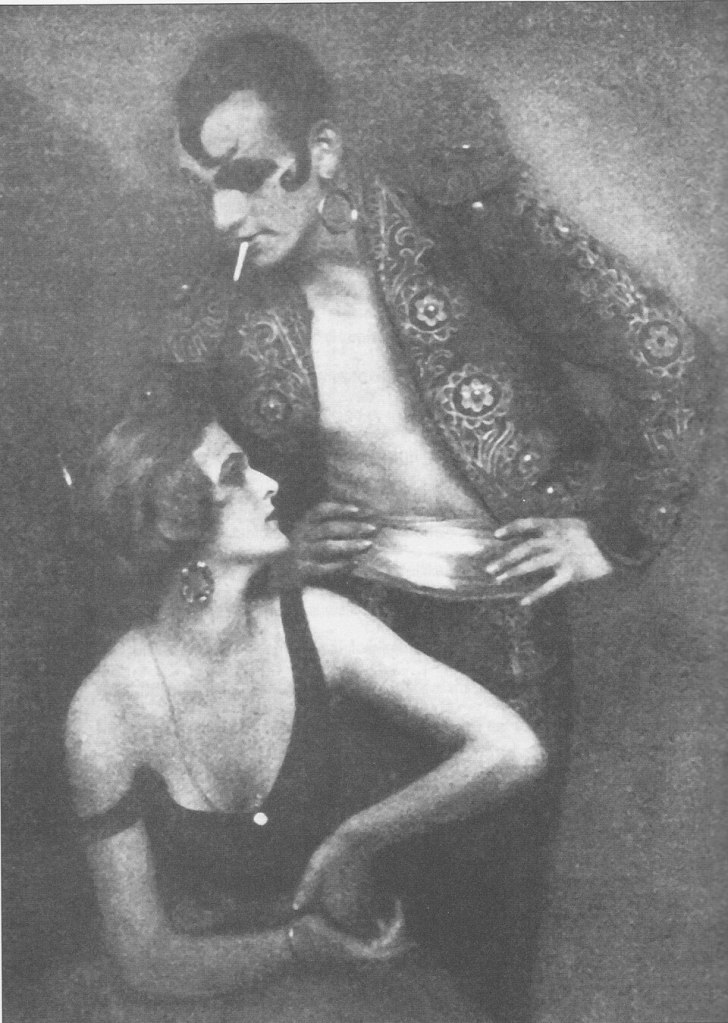
Drag performance flourished in this environment. Artists such as Anita Berber (pictured right) embodied a kind of decadent and androgynous performance style that shocked and fascinated audiences. Berber, often performing in little more than body paint or sheer costume, became a symbol of Weimar excess.
There were dedicated drag balls and venues, some documented by renowned sexologist Magnus Hirschfeld, who saw cabaret as part of a broader spectrum of gender and sexual identity.
Among the most famous was the Kit Kat Club. Though better known through later depictions, it reflects real places like the “Schall und Rauch” (Sound and Smoke) cabaret founded by Max Reinhardt. Another major hotspot was the Eldorado, a nightclub that became synonymous with Berlin’s queer nightlife. There, tourists and locals watched drag performances, same-sex dancing, and acts that would have been illegal elsewhere.
A Little Something for Everyone
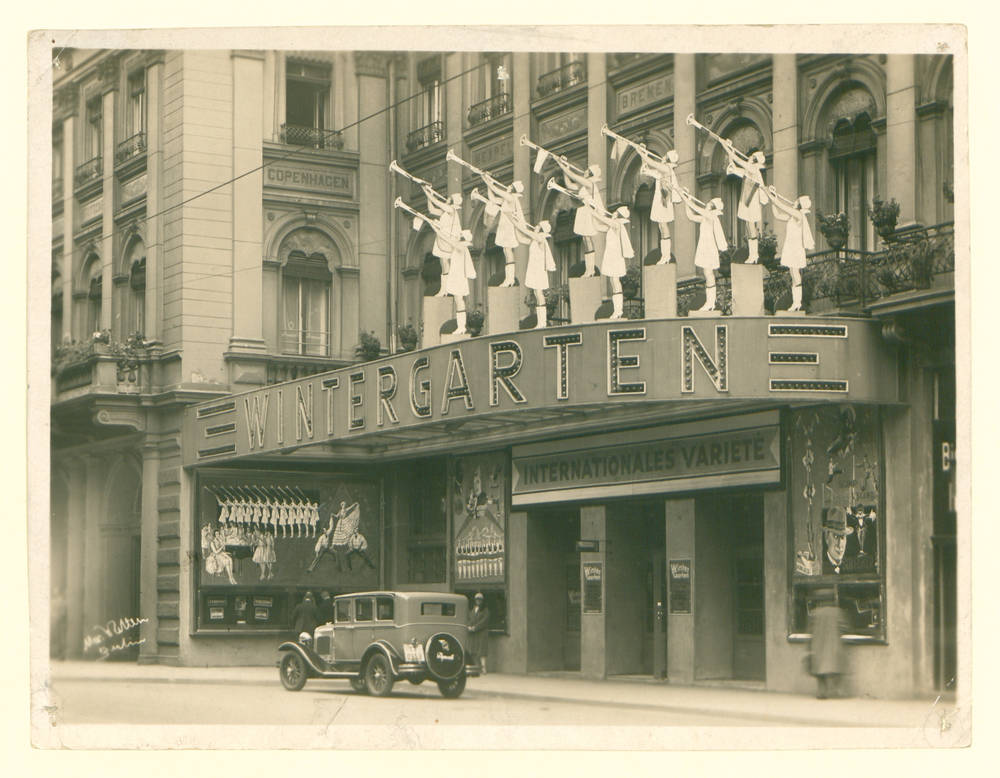
Cabarets varied in tone. Some leaned toward high art and intellectual satire, while others reveled in outright decadence. A venue like the Wintergarten offered polished revues with international acts, while smaller clubs specialized in sharp, intimate performances where the audience might be directly insulted by the singer.
There was a spectrum from clever political commentary to what critics called “moral collapse,” depending on who you asked…and how much wine they had.
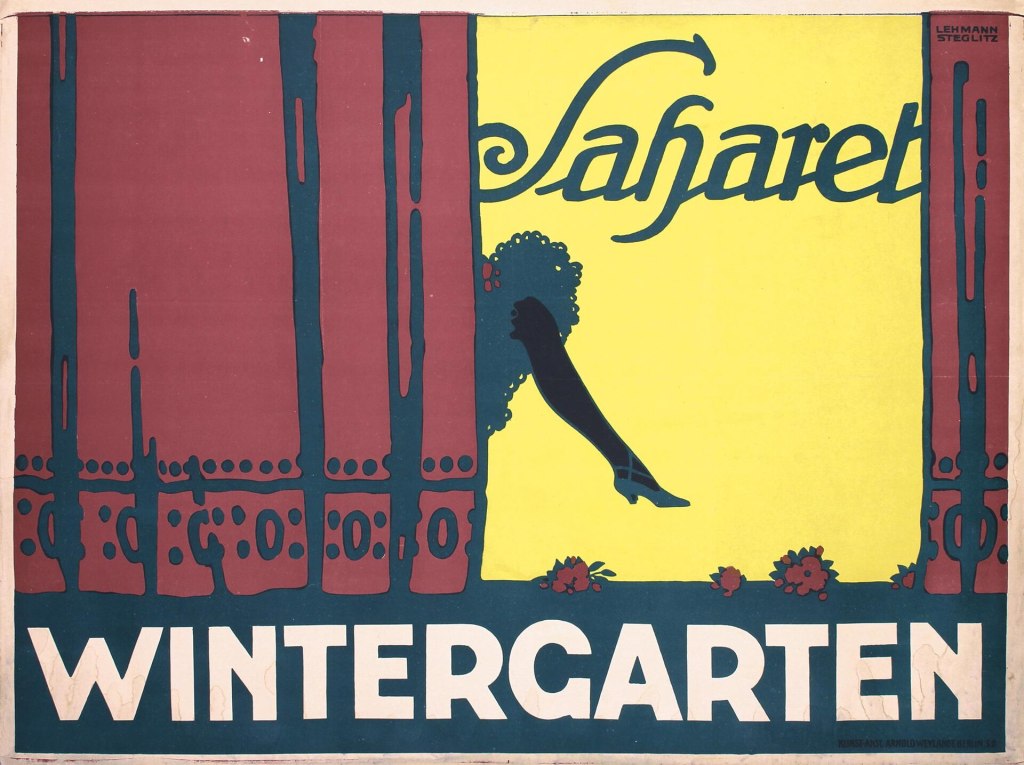
Foreign performers weren’t just a novelty in Germany, they helped shape the sound and style. Jazz became a defining feature in particular. Imported from the United States, it brought improvisation and a sense of looseness that differed with traditional music. French chanson singers, Russian immigrant performers fleeing revolution, and Eastern European musicians all contributed to an urban mix. Berlin wasn’t just German in this period; it was an aggressively international city.
This cultural explosion, however, existed alongside deep social anxiety. To conservatives, cabaret symbolized everything wrong with Weimar Germany: moral decay, foreign influence, and political subversion. Right-wing critics portrayed these venues as dens of degeneracy, often linking them to antisemitic conspiracies or fears of cultural collapse. In hindsight, cabaret became one of the clearest battlegrounds in the culture wars of the era: art versus order, freedom versus control.
The halls are washed in an antique cubism, all the remnants of lost cultures celebrate inside them a last rendezvous, and it would not surprise us suddenly to see the daughter of Amenophis of Egypt dancing among the couples in the arms of Oscar Wilde…what remains of the creative force of this sterile time unfolds: the genius of the eclectic, the cocktail mix of souls, the recklessness, the random toss and melding of complexes, the recklessness of puppets on a string, the passion of people condemned to death who want to eat one more blue and singing herring.
Alice Gerstel. Jazz Band, 1922
The Lights Go Out
By the early 1930s, that tension snapped. When the Nazis rose to power, cabarets were shut down, performers were arrested or exiled, and entire networks of artists vanished almost overnight. Jewish performers, foreign artists, and LGBTQ figures were especially targeted. What had been a vibrant, chaotic, and often brilliant cultural scene was systematically dismantled. The lights went out—not with a dramatic finale, but with quiet closures, empty stages, and a long list of names that simply stopped appearing on posters.
The bitter irony of Weimar cabaret is that it is often remembered as decadent, even frivolous, but it was actually one of the most honest mirrors of its time. It showed a society experimenting wildly, sometimes recklessly, with freedom right before it was taken away.
In those smoky rooms, with laughter and jazz echoing off the walls, you can almost hear a civilization arguing with itself… and losing.
Image Sources:
- Josephine Baker:: Wikimedia Commons. No changes. Source Link.
- Anita Berber and Sebastian Droste in Morphine:: Wikimedia Commons. No Changes. Source Link.
- Wintergarten Exterior:: Wikimedia Commons. No Changes. Source Link.
- Wintergarten Advert:: Wikimedia Commons. No Changes. Source Link.
“Ordinary Lives, Extraordinary Times”
(c) Jay Daniels. All rights reserved.


