
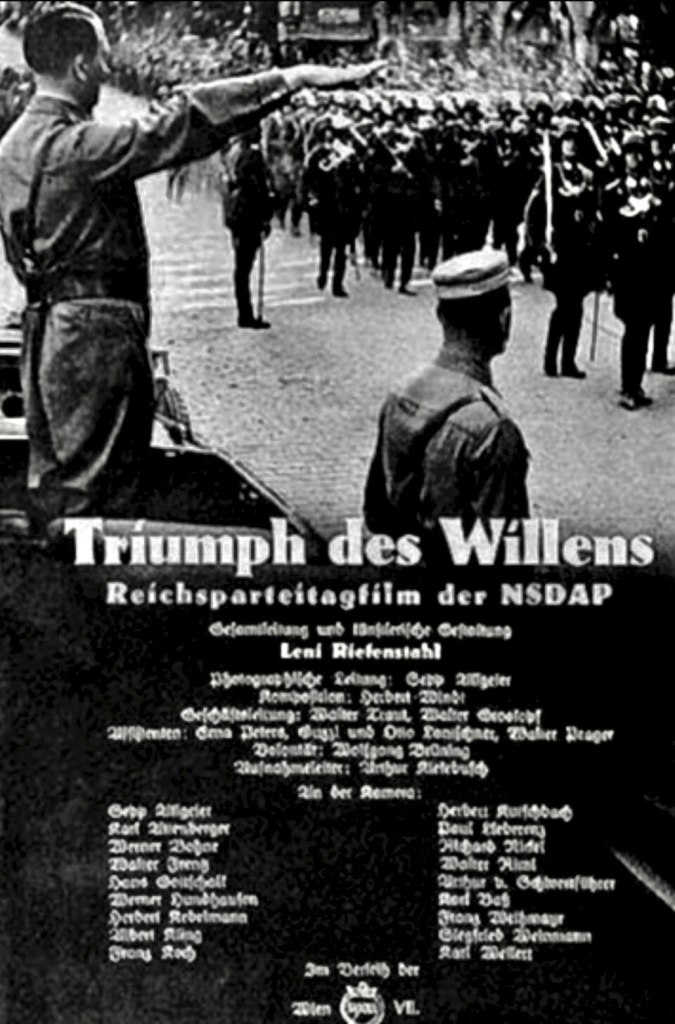
Triumph of the Will, directed by Leni Riefenstahl, was filmed at the 1934 Nuremberg Rally and released in 1935 as a cinematic celebration of the Nazi state and Adolf Hitler. It presents Hitler almost as a messianic figure descending from the clouds into a unified, disciplined Germany. It blends spectacle, ritual, and political messaging into something more immersive than a typical documentary. There is no narration; just imagery, music, and choreography.
Riefenstahl used sweeping aerial shots, moving cameras on tracks and cranes, carefully staged compositions, and rhythmic editing to transform mass rallies into something almost mythic. The film turns crowds into patterns, individuals into a single organism, and politics into visual theater. It essentially helped invent the language of modern propaganda.
In our own lives, the production influenced everything from later political campaign visuals to sports broadcasting and large-scale event filming.
Inside Germany, it was praised and widely promoted as a triumph of national cinema. Internationally, critics often admired its technical brilliance while uneasily recognizing its purpose. It won awards abroad, including a top prize at the Venice Film Festival and recognition at the Paris International Exposition.
 Ordinary Lives, Extraordinary Times